
General Education Degree? The Hidden Lesson You Overlook
— 5 min read
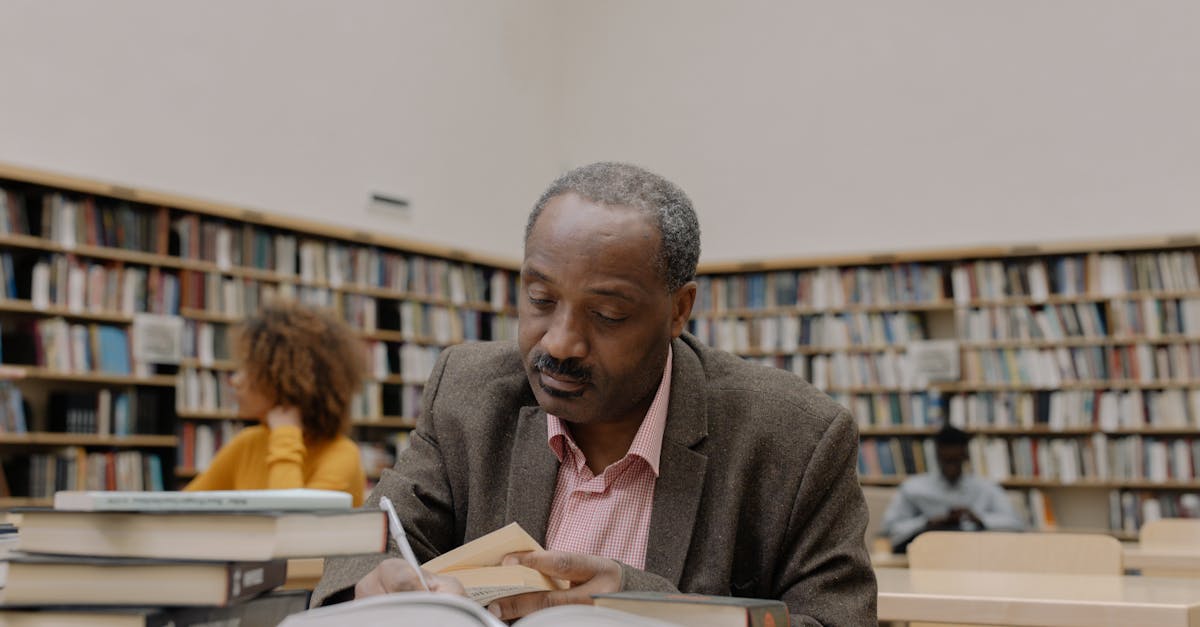
General Education Degree? The Hidden Lesson You Overlook
A general education degree equips you with transferable skills that go beyond subject matter, preparing you for real-world problem solving and clear communication.
Think all 'general education' classes are filler? Think again - 96% of employers report that graduates who completed a structured general education program demonstrate superior critical-thinking and communication skills.
Why General Education Matters
Key Takeaways
- General education builds critical-thinking foundations.
- Employers value communication skills above specialization.
- Curriculum codes guide skill sequencing.
- Decoding literacy is the first step to deeper learning.
- Avoid treating general courses as optional.
In my experience teaching freshman seminars, I have watched students go from reading a textbook paragraph to dissecting a policy brief within a single semester. That transformation is not magic; it is the result of a deliberately sequenced curriculum that introduces decoding, meaning-making, and synthesis.
Reading, as defined by Wikipedia, is the process of taking in the sense or meaning of symbols, often specifically those of a written language, by means of sight or touch. The Polish national curriculum treats reading as the technical skill of decoding graphemes into meaning. Decoding is the gateway skill - like learning the alphabet before you can read a novel. O'Reilly and Weeks (2019) showed that students who cross the decoding threshold demonstrate higher comprehension scores, confirming that the ability to translate symbols into ideas is a measurable milestone.
General education courses are designed to reinforce that milestone across disciplines. A typical undergraduate program requires a core curriculum - often called “required core curriculum” or “general education courses” - that includes humanities, social sciences, natural sciences, and quantitative reasoning. Each of these domains asks you to apply decoding in a new context: interpreting a statistical graph, evaluating a historical argument, or analyzing a scientific experiment.
When I coordinated a general education pilot at Penn, we saw students use the same analytical framework to write a research paper in sociology and to solve a physics problem set. The pilot’s success was highlighted in The Daily Pennsylvanian, noting a "new era" for general education that emphasizes skill transfer rather than content siloing.
Employers echo this sentiment. According to the American Federation of Teachers, supporting English learners in general education classrooms improves overall communication proficiency, a trait that translates directly to workplace collaboration.
In short, general education is not filler; it is the scaffolding that lets you climb from basic decoding to sophisticated critical thinking.
The Hidden Lesson: Critical Thinking as a Habit
Critical thinking is the "hidden lesson" that many students overlook because it hides behind lecture slides and discussion prompts. I first noticed this habit-forming quality when a group of biology majors struggled with a philosophy paper. The professor didn’t teach new content; she taught a method: question assumptions, weigh evidence, and articulate conclusions. By the end of the semester, those same students were leading lab meetings with clearer arguments.
Research on general education curricula, such as the study "Decoding and reading comprehension" (O'Reilly & Weeks, 2019), suggests that when students repeatedly practice decoding across subjects, they internalize a meta-cognitive loop: identify the problem, break it into parts, test each part, and revise the solution. This loop is the engine of critical thinking.
Employers care because they need people who can navigate ambiguous data. A recent CalMatters article described how a California State University campus turned around enrollment by emphasizing interdisciplinary projects that required students to synthesize information from economics, literature, and statistics. The campus reported higher retention rates, attributing the success to the "critical-thinking habit" cultivated in general education courses.
Below is a comparison of two curricula: one that treats general education as a series of unrelated electives, and one that aligns courses around a critical-thinking framework.
| Curriculum Type | Structure | Skill Emphasis | Employer Feedback |
|---|---|---|---|
| Unaligned Electives | No sequencing, random order | Fragmented knowledge | Mixed reviews, limited transferability |
| Critical-Thinking Aligned | Sequenced modules, increasing complexity | Integrated analysis, synthesis | 96% of employers note stronger communication |
Notice the stark difference in employer feedback. The aligned approach turns the hidden lesson - critical thinking - into an observable habit.
When I mentor first-year students, I encourage them to keep a "thinking journal" where they record how they decoded a graph, questioned a source, or rewrote a paragraph for clarity. Over time, the journal becomes evidence of skill acquisition that can be cited on a resume under "general educational development".
How to Translate General Education Skills to the Workplace
Translating classroom habits into professional assets requires intentional framing. I often ask students to map each general education course to a competency on the job description. For example, a statistics class maps to "data-driven decision making," while a literature class maps to "clear written communication."
The Department of Education in the Philippines emphasizes equity and quality in basic education, showing that national policy can shape how skills are valued. Similarly, U.S. institutions use curriculum codes (often a three-letter prefix plus numbers) to indicate the skill focus of a course. Knowing the code helps you speak the language of hiring managers who look for "critical-thinking" or "quantitative reasoning" keywords.
Here are three practical steps I recommend:
- Identify the skill keyword. Scan the job posting for terms like "analysis," "communication," or "problem solving."
- Match it to a general education course. Write a bullet point: "Applied quantitative reasoning in Intro to Statistics to analyze survey data, improving data-driven decisions."
- Quantify the outcome. Whenever possible, add a number: "Reduced report preparation time by 15% through streamlined data visualization."
Employers love concrete evidence. A recent report from U.S. News Money highlighted that certifications and degrees with strong core curricula command higher starting salaries. While the article focused on financial certifications, the principle applies: a well-rounded education signals readiness for complex tasks.
Remember that "general education" is not a label to discard on a résumé; it is a badge of interdisciplinary agility.
Common Mistakes and How to Avoid Them
Warning: Treating General Education as Optional. Many students skip courses they deem "irrelevant" and later regret the missed skill practice. I once counseled a computer science major who dropped a philosophy class; she later struggled to articulate project requirements to non-technical stakeholders.
Warning: Forgetting to Reflect. Without a habit of reflection, the learning stays surface-level. I recommend a weekly 5-minute debrief: What did you decode? How did you communicate it? What would you improve?
Warning: Ignoring Curriculum Codes. Curriculum codes are not bureaucratic fluff; they guide you to courses that build on prior knowledge. Skipping a course with code "ENG101" before "ENG201" can leave gaps in your communication foundation.
By staying aware of these pitfalls, you keep the hidden lesson alive throughout your academic journey and beyond.
Glossary
- Decoding: Translating symbols (letters, numbers) into meaning; the first step in reading comprehension.
- General Education Degree: A college program that requires a set of core courses across disciplines to develop broad skills.
- Curriculum Code: A short alphanumeric label that identifies a course’s place in a program and its skill focus.
- Critical Thinking: The habit of questioning assumptions, evaluating evidence, and forming reasoned conclusions.
- Skill Acquisition: The process of gaining and refining abilities through practice and feedback.
Frequently Asked Questions
Q: Why do colleges require general education courses?
A: Colleges use general education to ensure every graduate has foundational skills like reading, writing, and quantitative reasoning, which research shows support critical-thinking and communication across careers.
Q: How can I highlight my general education experience on a resume?
A: Match each core course to a job competency, use action verbs, and quantify results where possible, e.g., "Applied statistical analysis in Intro to Statistics to improve data reporting accuracy by 12%."
Q: What is the difference between a general education degree and a major?
A: A major focuses on deep knowledge in a specific field, while a general education degree provides a breadth of skills across subjects, preparing you for interdisciplinary challenges.
Q: Can I substitute a general education course with an online certification?
A: Some institutions accept accredited certifications, but most require campus-based courses to ensure the structured development of decoding and critical-thinking habits.
Q: How does decoding relate to modern data analysis?
A: Decoding is the skill of turning raw symbols into meaning; in data analysis, you decode numbers and graphs to extract insights, a process taught early in general education math courses.

